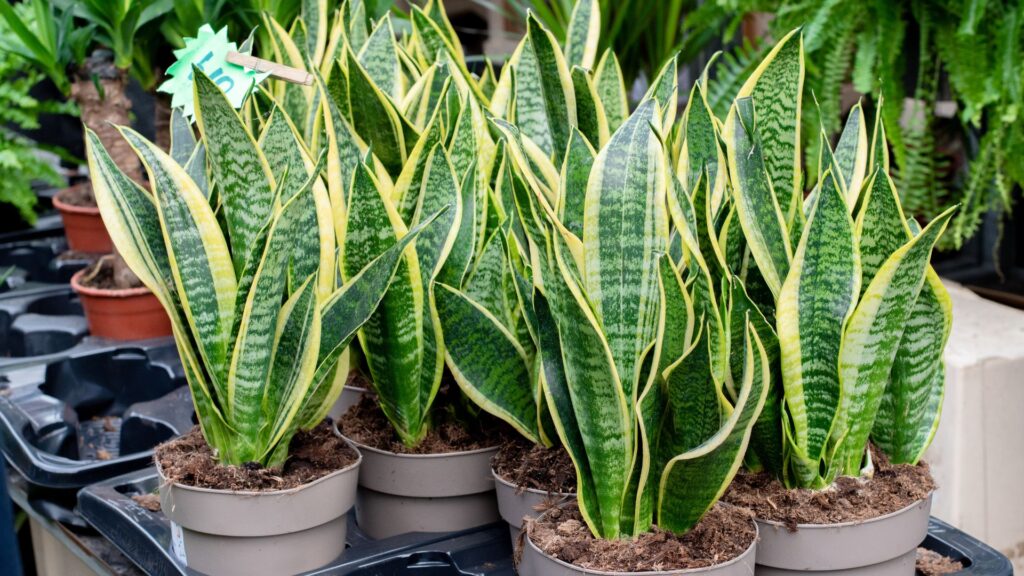
The Snake Plant (Sansevieria trifasciata) is one of the most popular indoor plants because it is beautiful, hardy, and incredibly easy to care for. Its upright leaves and striking green patterns make it perfect for homes and offices.
Why Choose a Snake Plant?
- Extremely low maintenance
- Thrives in low light
- Drought tolerant
- Excellent air-purifying plant
- Ideal for beginners
- Modern, elegant appearance
Light Requirements
Snake Plants grow best in bright, indirect light, but they also tolerate low-light areas. They can handle a little morning sunlight, but avoid strong afternoon sun.
Watering
Allow the soil to dry completely before watering.
- Water every 2–4 weeks depending on the season.
- Water less during winter.
- Never let the plant sit in water.
Soil
Use a well-draining cactus or succulent potting mix.
Good drainage helps prevent root rot.
Temperature & Humidity
- Temperature: 18–30°C
- Humidity: Normal indoor humidity
No misting is required.
Fertilizer
Feed with a balanced liquid fertilizer every 6–8 weeks during spring and summer.
Common Problems
Yellow Leaves
Usually caused by overwatering.
Soft Leaves
Root rot due to excess moisture.
Brown Tips
Can occur because of underwatering or salt buildup from fertilizer.
Repotting
Repot every 2–3 years or when roots become crowded.
Quick Care Summary
- Light: Bright indirect to low light
- Water: Every 2–4 weeks
- Humidity: Normal
- Temperature: 18–30°C
- Fertilizer: Every 6–8 weeks
- Difficulty: Very Easy
- Pet Friendly: ❌ No (toxic if chewed by cats and dogs)
Final Tip
Snake Plants are among the toughest houseplants available. Even if you occasionally forget to water them, they usually continue to thrive, making them an excellent choice for beginners.