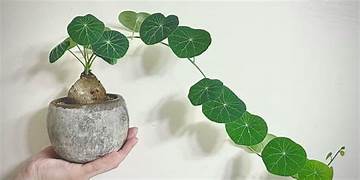
What Makes Stephania erecta Special?
- Beautiful round leaves
- Decorative exposed caudex
- Perfect for modern interiors
- Rare collector’s plant
- Long-lived with proper care
Understanding Dormancy
One of the biggest reasons people think their Stephania has died is because it naturally goes dormant.
During dormancy:
- The leaves turn yellow and fall off.
- The caudex stays alive underground or above the soil.
- This is completely normal.
New leaves usually appear when the growing season begins.
Light
Stephania erecta prefers:
- Bright indirect light
- Morning sunlight for 1–2 hours is beneficial.
- Avoid harsh afternoon sun.
Water
The most common mistake is overwatering.
When there are NO leaves:
- Water very lightly, about once every 2–3 weeks.
- The caudex stores water, so it does not need frequent watering.
When leaves appear:
- Water only after the top 2–3 cm of soil has dried.
Never allow the pot to remain soggy.
Soil
Use a fast-draining soil mix.
A good mix is:
- 40% potting soil
- 30% coco chips or orchid bark
- 20% perlite
- 10% coarse sand
Good drainage is essential to prevent rot.
Temperature
Ideal temperature:
- 20–32°C
Protect the plant from cold temperatures below 15°C.
Fertilizer
Feed once a month during active growth with a balanced liquid fertilizer at half strength.
Do not fertilize while the plant is dormant.
Common Problems
Caudex becoming soft
Usually caused by overwatering.
No leaves for months
The plant may simply be dormant. Be patient and continue providing warmth and bright light.
Yellow leaves
Often a normal part of dormancy or caused by excessive watering.
Quick Care Summary
- Light: Bright indirect light
- Water: Very little during dormancy
- Soil: Fast-draining mix
- Temperature: 20–32°C
- Fertilizer: Monthly during growth
- Difficulty: Moderate
- Pet Friendly: Not recommended
Final Tip
Patience is the secret to growing Stephania erecta. Many plants stay dormant for weeks or even months before producing beautiful new leaves. Avoid the temptation to overwater—it is the most common cause of failure.